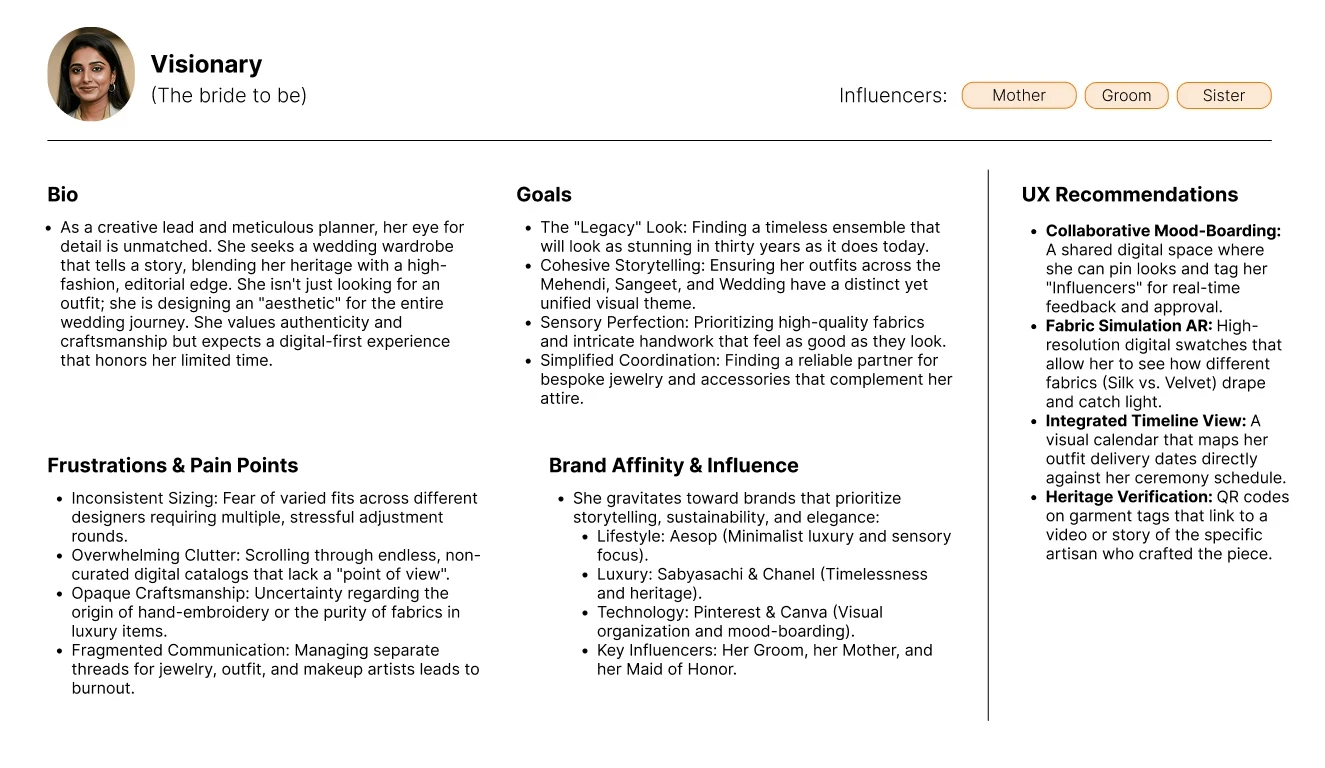
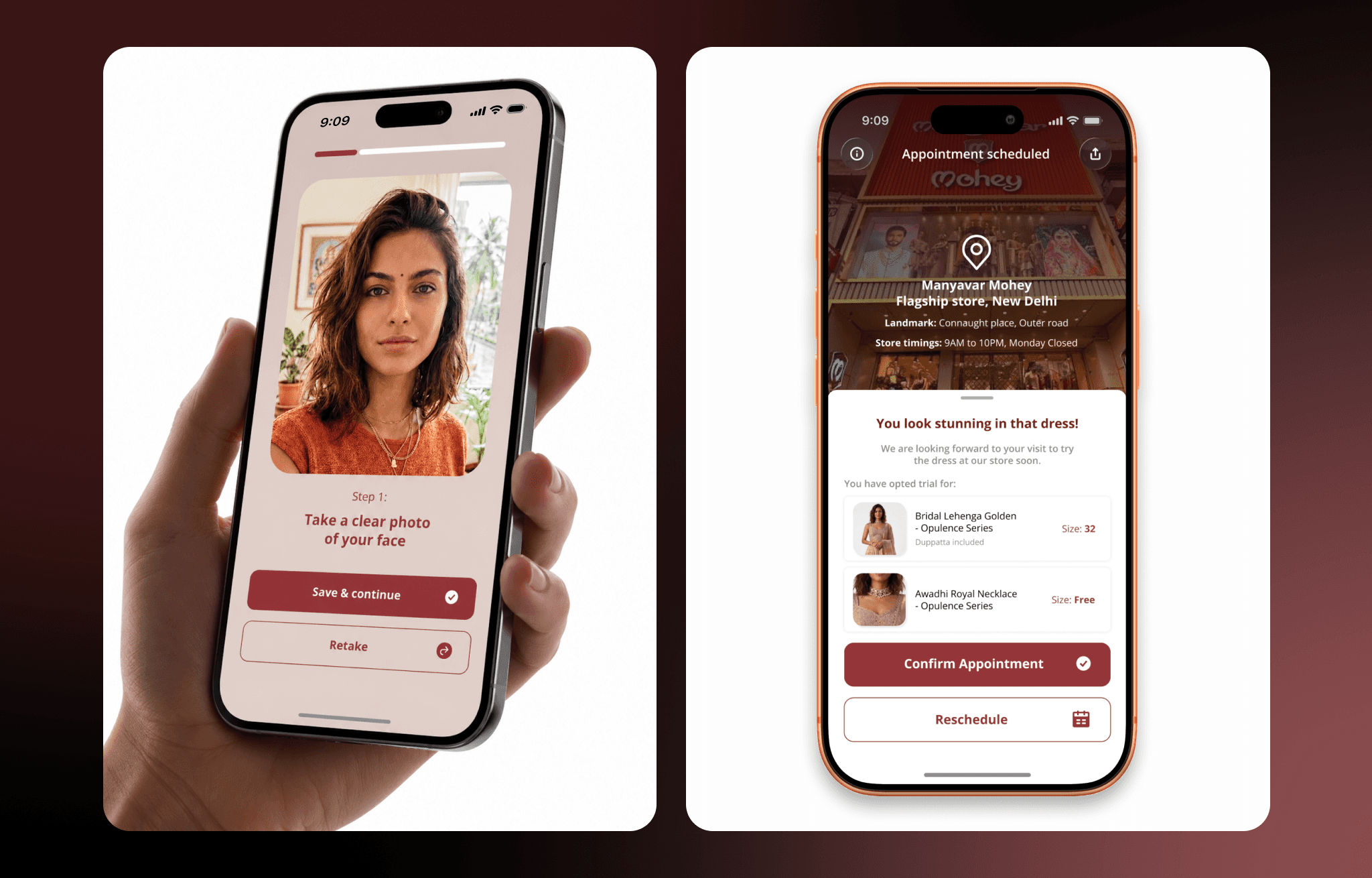
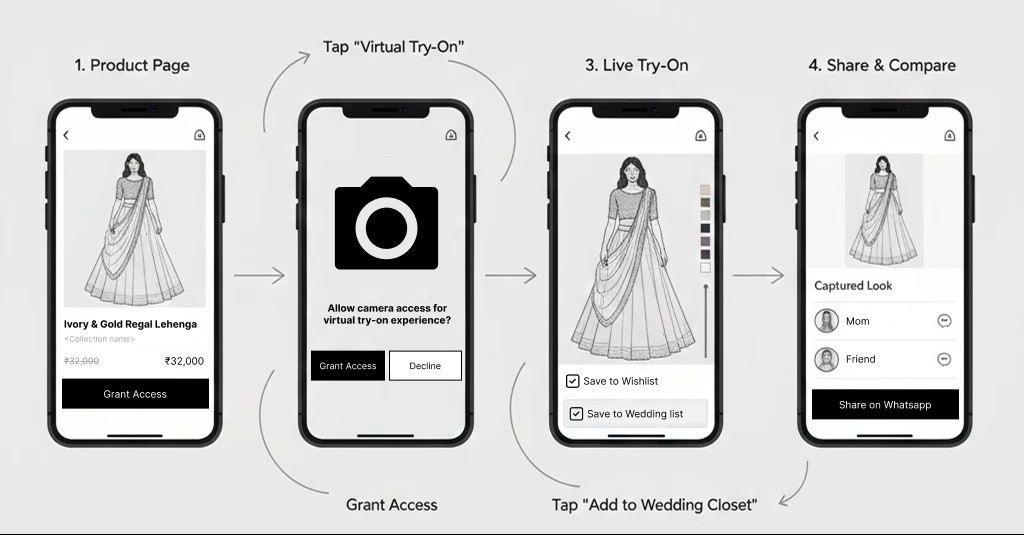
Mohey, Manyavar’s women’s ethnic-wear label, set out to bring its festive in-store experience online. The new digital flagship lets brides, families and festive shoppers browse, plan and buy wedding attire through features like a shareable Wedding Closet, curated lookbooks and mobile-first navigation, delivering the brand’s celebratory feel with the ease of e-commerce.
Role
UX Consultant (Deloitte Digital)
Project type
UX strategy, User Research and Usability testing
Client
Vedant Fashions, ltd. (Manyavar-Mohey)
The Challenge
Mohey: Manyavar’s women’s ethnic-wear brand, wanted to move beyond its celebrated offline stores and create a premium, festival-ready digital shopping experience.
The goal was simple but ambitious:
How might we scale Mohey’s digital footprint so customers can confidently browse, customise and buy ethnic wear online capturing the warmth and excitement of an in-store wedding-shopping visit?
Capturing a ₹1.4-trillion market with a celebration-ready online experience
Background Research
To capture the feel of in-store celebration in a digital environment, we combined business discovery with deep user research:
Surveys and On-site Observation – captured preferences on traditional clothing, budgets and the influence of family members on purchase decisions.
Campaign and Social Analysis – studied how users interacted with Manyavar and Mohey on Instagram and other platforms to identify triggers for festive shopping.
Competitive Benchmarking – analysed leading Indian ethnic-wear sites and global weddingwear platforms to understand gaps in navigation, personalisation and mobile user experience.

Key Success Metrics Identified
Together with Mohey stakeholders we defined digital success through:
Online Engagement
Time spent per session and wedding-closet creations.
Conversion Rate
Completed orders and booking of outfits.
User Satisfaction
Qualitative ratings from usability testing and post-launch surveys.
Brand Perception
Customer feedback on whether the site captures the celebratory Manyavar–Mohey ethos.
Our research reframed how we understood intent:
Customers often begin with only a vague idea of style and look for inspiration before committing.
Family members strongly influence selections, making collaborative features such as shareable wedding closets essential.

Design Process
1. Discover
Conducted 83 interviews across 7 cities (a mix of Metro, Tier-1 and Tier-2 locations) covering brides, grooms, festive buyers and key family decision-makers aged 25–55.
Observed store visits to learn how families browse together and how influencers such as parents and siblings shape final decisions.

2. Define
Created personas that included not only primary buyers but also family influencers.
Mapped the information architecture and prioritised features such as the Wedding Closet and guided lookbooks.
3. Design
Built wireframes and rapid prototypes to test flows for product discovery and wedding-closet creation.
Developed a festive visual language with traditional motifs, rich colour palettes and purposeful motion design to create moments of magic without slowing the site.
Ran iterative usability testing to refine checkout and mobile navigation.
Outcome
Reflection
Thanks for reading, you may also like
Product Design
№001
Brand Strategy
№002
No Code Dev
№003
UX Reserach
№004