Shell GO+
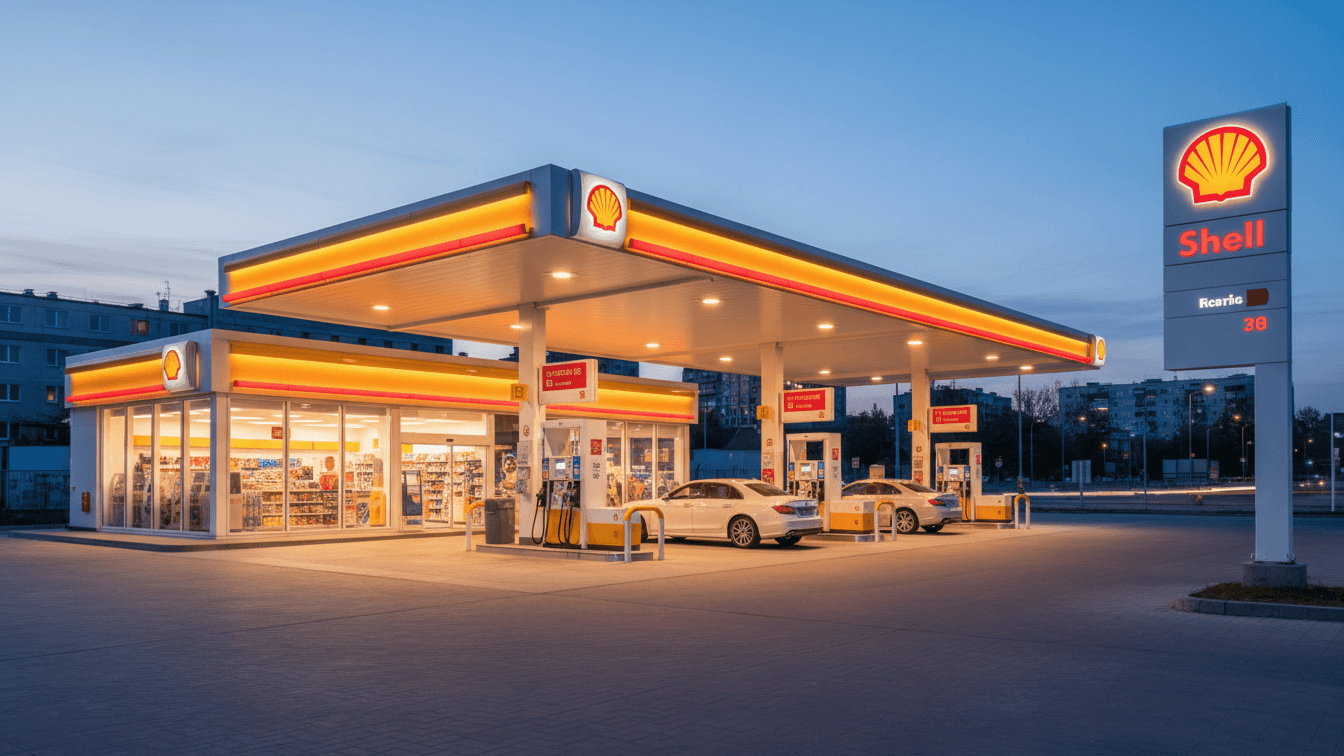
Shell, one of the world's leading oil and gas companies, introduced Shell Select convenience stores at its gas stations. Through this program, customers can purchase items using loyalty points earned with the Shell V-Power card.
Physical loyalty cards are easily forgotten, prone to damage, and fail to keep users engaged. As part of the design leadership team, I led the transition from physical cards to a seamless digital service.
Shell GO+
Shell, one of the world's leading oil and gas companies, introduced Shell Select convenience stores at its gas stations. Through this program, customers can purchase items using loyalty points earned with the Shell V-Power card.
Physical loyalty cards are easily forgotten, prone to damage, and fail to keep users engaged. As part of the design leadership team, I led the transition from physical cards to a seamless digital service.
Overview
Role
Role
Role
UX Consultant (Deloitte Digital)
UX Consultant (Deloitte Digital)
UX Consultant (Deloitte Digital)
Project type
Project type
Project type
UI/UX design, User research and Usability testing
UI/UX design, User research and Usability testing
UI/UX design, User research and Usability testing
Client
Client
Client
Royal Dutch Shell, plc
Royal Dutch Shell, plc
Royal Dutch Shell, plc

The Shell GO+ app offers a unique approach to loyalty programs by rewarding customers with visits to build their points.
This innovative concept has already been launched in multiple countries throughout Europe and Asia. The app's rewards system is designed to incentivize customers by offering a range of exclusive benefits, including discounts, instant rewards, and more.
The Shell GO+ app offers a unique approach to loyalty programs by rewarding customers with visits to build their points.
This innovative concept has already been launched in multiple countries throughout Europe and Asia. The app's rewards system is designed to incentivize customers by offering a range of exclusive benefits, including discounts, instant rewards, and more.
The Challenge
The brief was straightforward but ambitious

How do we….
Create a loyalty-on-demand platform that customers could use effortlessly at fuel stations. Users needed to track points, redeem rewards, and engage with Shell’s services without wading through unnecessary friction. The problem was clear - most existing loyalty apps in the market were cluttered, confusing, or lacked personalization.
How do we….
Create a loyalty-on-demand platform that customers could use effortlessly at fuel stations. Users needed to track points, redeem rewards, and engage with Shell’s services without wading through unnecessary friction. The problem was clear - most existing loyalty apps in the market were cluttered, confusing, or lacked personalization.
Background Research


COMPETITIVE ANALYSIS
We analyzed major competitors such as BPme, Esso Rewards, and Nectar. Across the board, we found:
Points accumulation was straightforward but often rigid.
Redemption was cumbersome - requiring multiple steps or having limited reward options.
Community features were minimal, leaving engagement opportunities untapped.
This showed us a clear opportunity: prioritize simplicity and immediate value over gimmicks or complex mechanics.
We analyzed major competitors such as BPme, Esso Rewards, and Nectar. Across the board, we found:
Points accumulation was straightforward but often rigid.
Redemption was cumbersome - requiring multiple steps or having limited reward options.
Community features were minimal, leaving engagement opportunities untapped.
This showed us a clear opportunity: prioritize simplicity and immediate value over gimmicks or complex mechanics.
TARGET PERSONAS
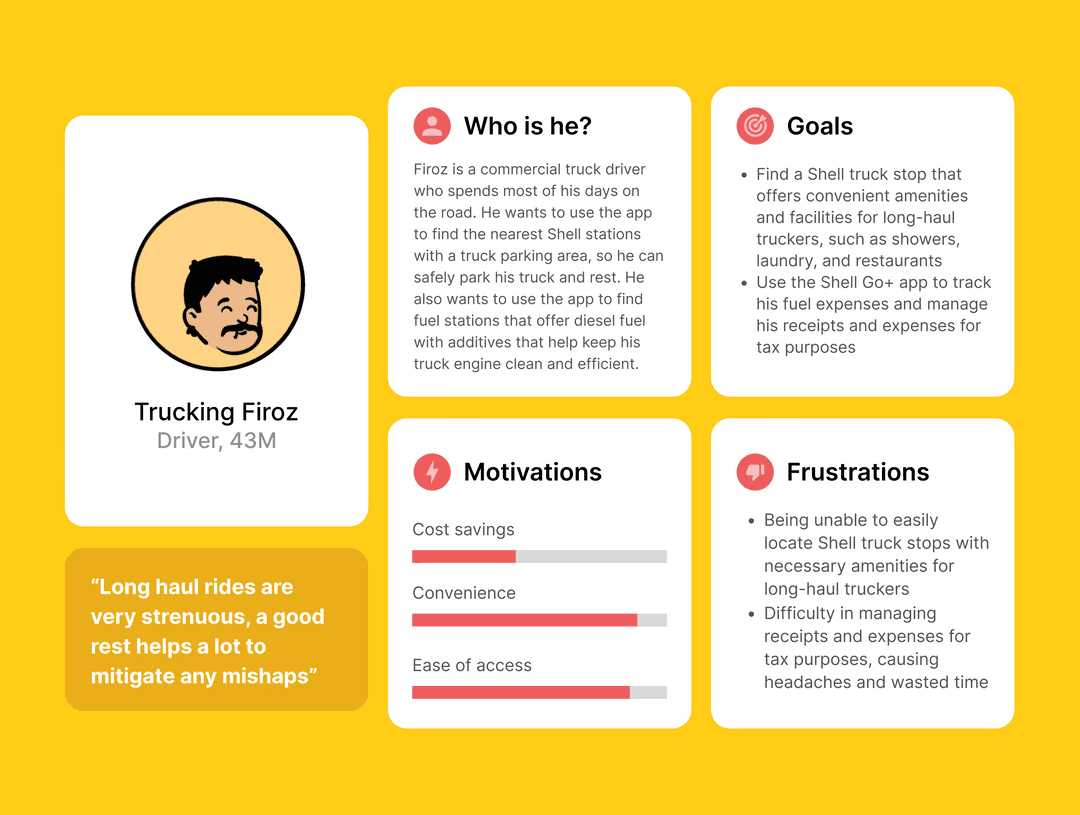
Personas focus teams on specific users, avoiding the “design for everyone” trap and guiding feature decisions through a clear evaluation lens.



Process
Using an iterative Design Thinking technique, we worked in iterative cycles of 6 stages:
Developed personas and mapped end-to-end journeys.
Prototyped a mobile-first experience to replace physical cards.
Tested early flows with real users to refine pain points.
Using an iterative Design Thinking technique, we worked in iterative cycles of 6 stages:
Developed personas and mapped end-to-end journeys.
Prototyped a mobile-first experience to replace physical cards.
Tested early flows with real users to refine pain points.
Design moved in two-week cycles: sketches and flows on Monday, working prototypes by Wednesday, and a review with engineering and stakeholders by Friday. This cadence kept feedback loops short and let the system evolve without stalling delivery.

By establishing a clear hierarchy and logical navigation, a solid IA reduces cognitive load and prevents users from feeling overwhelmed. Mapping this framework early avoids costly design and engineering re-work while ensuring the product scales smoothly as new features are added.


Outcome
To ensure visual and functional consistency across the entire ecosystem, I aligned the interface design with the Shell Design System 2.0. Utilizing this established framework of pre-built components, typography scales, and structural guidelines allowed me to accelerate the production of high-fidelity screens.
To ensure visual and functional consistency across the entire ecosystem, I aligned the interface design with the Shell Design System 2.0. Utilizing this established framework of pre-built components, typography scales, and structural guidelines allowed me to accelerate the production of high-fidelity screens.


Six months after launch, the new system is the default foundation for every new feature shipped across the product, cutting design-to-development handoff time significantly.
Six months after launch, the new system is the default foundation for every new feature shipped across the product, cutting design-to-development handoff time significantly.
80%
Users enrolled digitally in-store on launch day
3.2x
Activation driven by smart onboarding and promotional incentives
3.65/5
was the rating by 1250 users in-app
Other projects
Other projects
Other projects

Manyavar Mohey
Digital twin for an ethnic-wear app
Sentinel
Build an Engagement Risk Analysis Software

Opulence Bank Design System
Rebuilding a Design System for the AI era